
Published By: Anurag K
2nd April , 2025
Merlin Auto Group
In 1998, BMW lost a bidding war. Then it won the prize anyway — without buying the factory, the workforce, or even the car designs it was bidding on. The story of how BMW ended up owning the Rolls-Royce brand is one of the more instructive case studies in modern corporate strategy: a lesson in recognizing that the most valuable asset in a deal isn’t always the one everyone is fighting over.
The Deadlock: A Brand Ceiling BMW Couldn’t Engineer Its Way Past
By the 1990s, BMW had built one of the strongest mid-to-premium car brands in the world. But “The Ultimate Driving Machine” had a ceiling. BMW was aspirational, but it wasn’t sovereign. It was, as the market perceived it, a superb car for a successful executive — not a car for royalty, heads of state, or old-money wealth. No amount of engineering investment could change that perception, because the limitation wasn’t technical. It was reputational, built over decades, and BMW couldn’t simply “upgrade” its way into the ultra-luxury tier without diluting the brand that had made it successful in the first place.
BMW’s answer wasn’t to stretch its own badge further than it could credibly go. It was to go looking for a brand that already had exactly what BMW was missing: 90-plus years of unshakeable prestige.
The Bid: Losing on Price
In 1998, Volkswagen acquired Rolls-Royce’s factories and Bentley, while BMW secured the Rolls-Royce name and logo for £40 million. That outcome, however, only tells half the story.
Rolls-Royce Motors had been owned by the British engineering conglomerate Vickers plc, and by the late 1990s Vickers had put the business up for sale. BMW, which already had a technical supply relationship with Rolls-Royce and Bentley, had a strong claim as the natural buyer. BMW’s final offer of £340 million was outbid by Volkswagen’s £430 million, and on paper, Volkswagen walked away with everything: the Crewe factory, the workforce, the car designs, the Spirit of Ecstasy hood ornament, and the distinctive grille.
By every conventional measure, BMW had lost.
The Twist: What Vickers Was Actually Selling
Here’s where the case study gets interesting. Vickers didn’t fully own the thing Volkswagen thought it was buying. The Rolls-Royce name and its interlocking “RR” logo belonged not to the car company Vickers sold, but to Rolls-Royce plc — the separate aerospace company that had licensed those marks into the motor business decades earlier.
Volkswagen’s purchase from Vickers secured the Spirit of Ecstasy mascot and the grille shape rights, but not the Rolls-Royce trademark or the RR badge itself, which remained with Rolls-Royce plc. Volkswagen had spent nearly half a billion pounds acquiring a luxury car company that, at some point in the future, would not legally be permitted to call its cars “Rolls-Royce.”
BMW recognized this before Volkswagen fully did — and moved. Rolls-Royce plc licensed the Rolls-Royce name and logo to BMW for £40 million, a fraction of what Volkswagen had just paid for the physical business. Volkswagen’s own chairman later conceded the miscalculation: Ferdinand Piëch acknowledged that had his team fully understood the trademark situation earlier, the price Volkswagen paid would have been significantly lower.
The Resolution: A Five-Year Handover, Then a Clean Split
The situation left both companies in an awkward standoff. Volkswagen owned the factory and could keep producing cars under license for a transition period, but it had no long-term right to the name. BMW owned the name, but had no factory to build the cars in yet — and it still supplied the engines Volkswagen’s Rolls-Royce and Bentley models depended on.
>BMW’s existing engine supply contract could be cancelled with just 12 months’ notice, and Volkswagen would not have had time to re-engineer its vehicles around a different engine in that window. That leverage brought Volkswagen back to the table. Volkswagen agreed to sell BMW the Spirit of Ecstasy and grille trademarks, while BMW agreed to keep supplying engines until 2003. Meanwhile, Volkswagen kept the Crewe factory and relaunched it as Bentley Motors, while BMW built an entirely new Rolls-Royce headquarters and factory at Goodwood in England, with full production beginning in 2003.
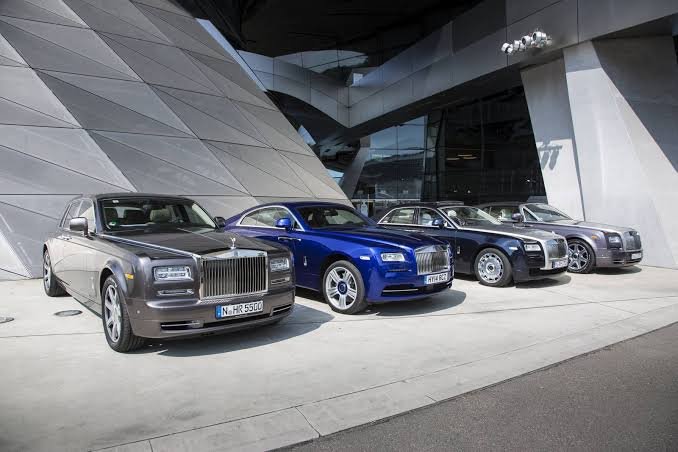
The outcome: two of the world’s most storied luxury marques ended up permanently separated, each owned by a different German manufacturer — Bentley by Volkswagen, Rolls-Royce by BMW — despite having shared a single corporate parent for decades beforehand.
Why This Case Study Matters
1. The asset worth fighting for isn’t always the one on the balance sheet. Volkswagen won the auction for the tangible assets — the factory, the workforce, the existing car lineup. BMW secured the intangible asset: the name itself, which is the entire reason anyone pays a Rolls-Royce price in the first place. A century-old reputation turned out to be worth more than the machinery that built the cars.
2. Losing a negotiation and losing the outcome are not the same thing. BMW’s £340 million bid failed. If BMW had treated that as the end of the story, Rolls-Royce would be a Volkswagen brand today. Instead, BMW treated the loss as new information about where the real value in the deal actually sat, and moved on a target nobody else was bidding on.
3. Brand elasticity has a hard limit, and manufacturing your way past it rarely works. BMW could have kept trying to launch an ultra-premium BMW sub-brand. Plenty of manufacturers have tried this and struggled, because prestige of this kind is not something that can be built quickly at any price — it has to already exist somewhere and be acquired. BMW’s willingness to buy heritage rather than attempt to manufacture it from scratch is the core strategic insight of the entire case.
4. Contractual leverage can outlast the initial deal. BMW’s ongoing engine supply agreement — a seemingly minor operational detail from the original Vickers-era business — became the exact pressure point that forced Volkswagen back to the negotiating table on BMW’s terms. Long-term supplier relationships can carry strategic value far beyond their original commercial purpose.
The Takeaway
BMW’s acquisition of Rolls-Royce is often summarized as simply “BMW bought Rolls-Royce” — but the real story is that BMW lost the bid for the company and won the brand anyway, by recognizing that ownership of a name can matter more than ownership of the factory that puts it on a car. For any business facing a ceiling that money and engineering alone can’t solve, the lesson is the same one BMW acted on in 1998: sometimes the fastest way past a wall you can’t break is to acquire someone else’s door.